Published in Nashim magazine
Building a Community
Sarit Levi Ashkenazi l Photo: Yossi Zeliger
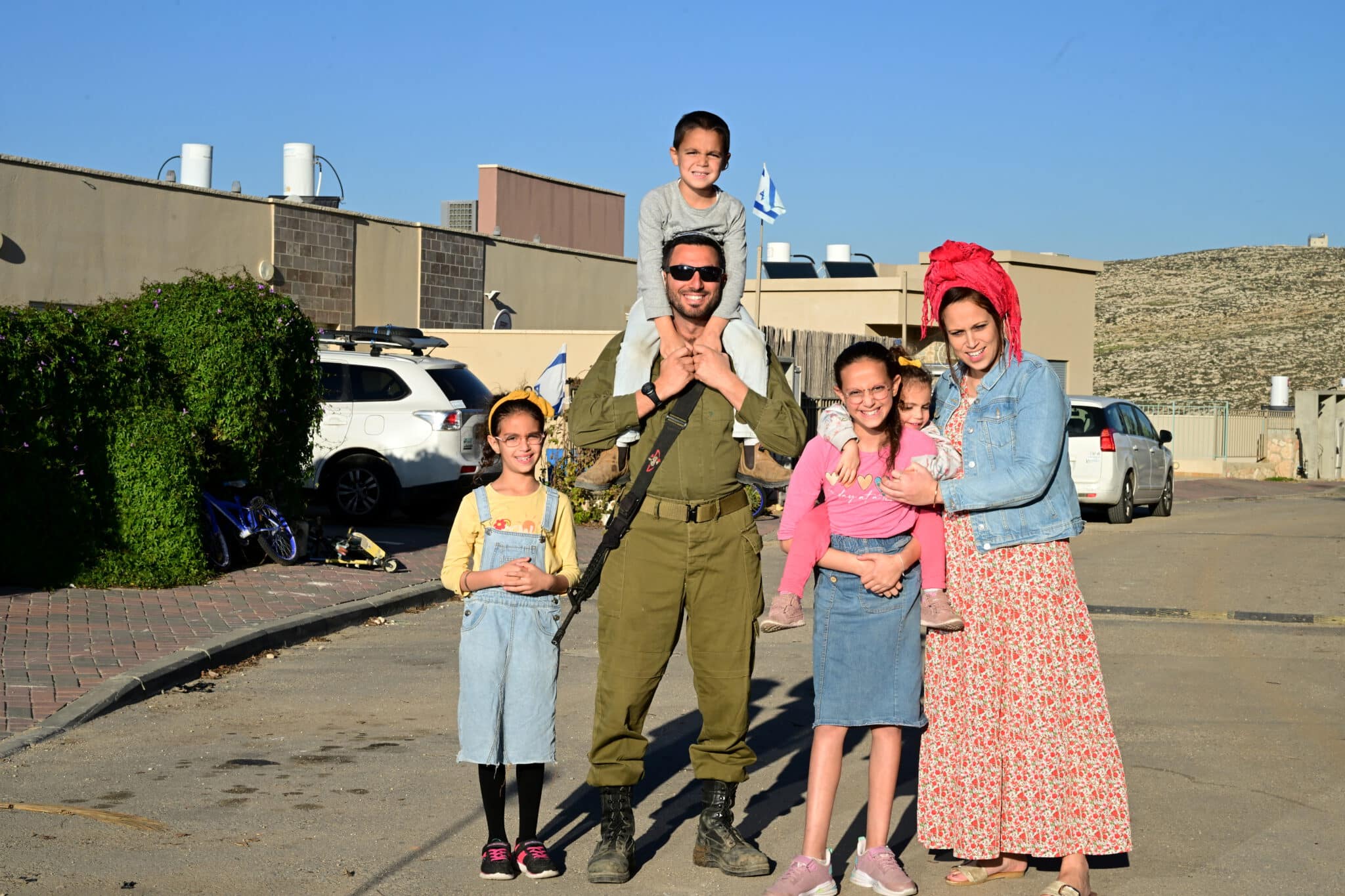
The warm and welcoming community of Negohot drew the Sarusi couple to build their home there. Now they are waiting to move into their permanent house in the new neighborhood and continue fostering community activity and social contribution in the settlement.
The view is pristine, the community is everything
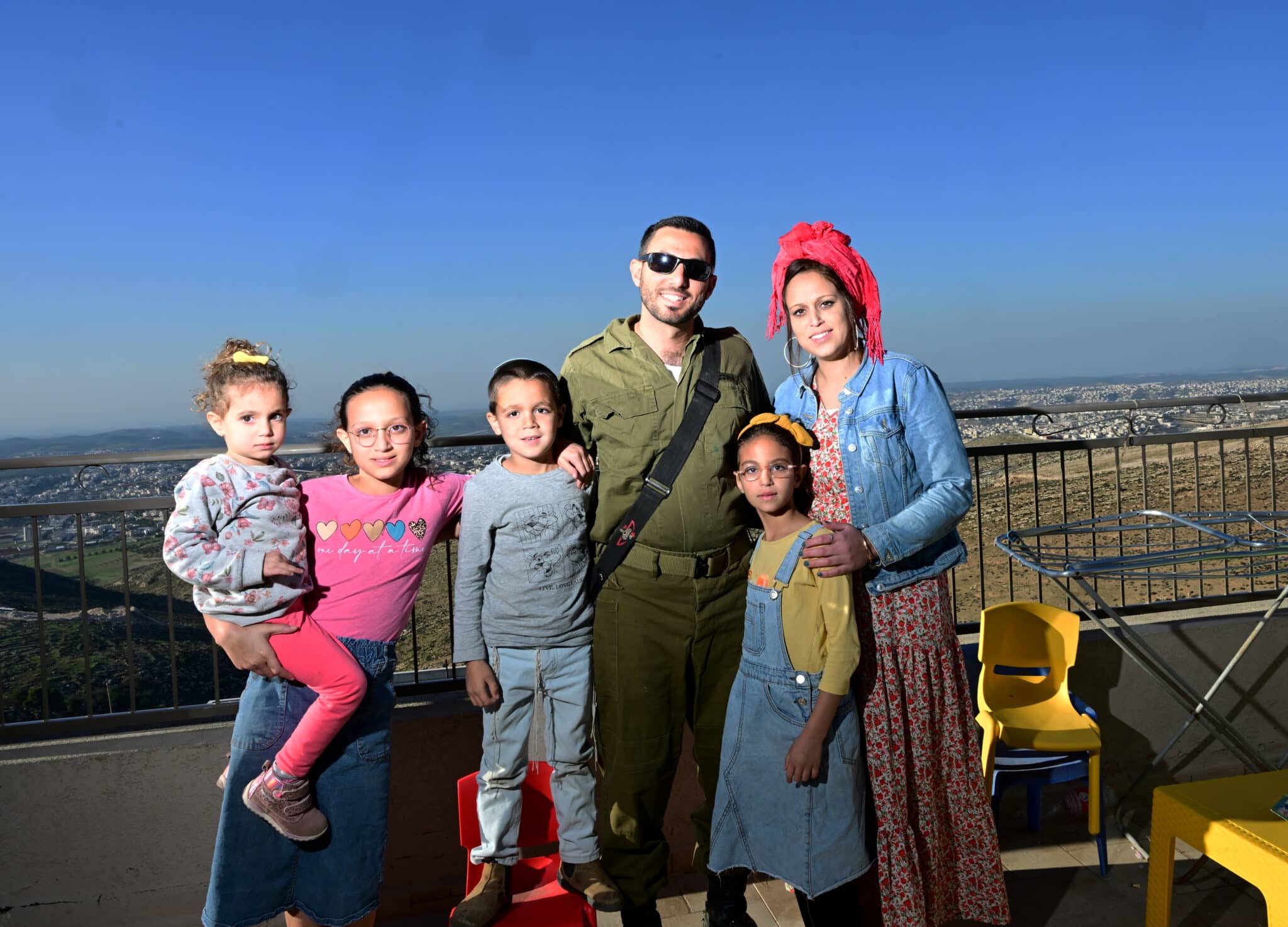
The Sarusi Family
Avia (33), project manager at a construction company, keyboardist at events, and youth coordinator in Negohot. Currently serving in the reserves.
Racheli (32), special education teacher, homeroom teacher for 6th grade at Noam Banot school in Bnei Dekalim.
The couple has been married for 11 years and has four children: Te’ir (10), Hila (8), Ziv Mordechai (5.5), and Leshem Hana (2.5).
Waze address: Negohot
Where did we come from?
“We are both originally from Jerusalem. After our wedding we lived in Mitzpe Yericho, near the yeshiva where Avia studied. Later we moved to Mevo Horon. When we realized we couldn’t develop there in terms of housing, we started looking for a settlement where we could establish our home.”
Why here?
“Racheli’s sister decided to move to Negohot, and after seeing several settlements in the Lachish area, we came to Negohot and immediately fell in love,” says Avia, and Racheli continues: “The people’s attitude was exceptionally welcoming. There is a high-quality, religious, and warm community here. We visited several settlements but never encountered such a level of care and acceptance.” In addition, they say, the settlement is relatively small, with about 100 families. “There is a family-like atmosphere, everyone knows everyone, but at the same time there is space and legitimacy to be yourself.”
Things we love about the settlement
“First of all, the unique pristine view. Another important thing is ‘Rabbi Ofer’s Talmud Torah,’ which has become a landmark in the community. Children come there for Torah lessons daily, including Shabbat and holidays. A few months ago, he kept the kids busy until late,” they laugh. “Also, the special atmosphere during the war, the partnership and care of the community, proved that we made the right choice.”
A pleasant surprise
“We came without expectations,” they both say, and Racheli adds that she hadn’t intended to settle here out of ideology. “Gradually, living here took on an ideological meaning, and I was surprised to find that settling the land became an important value for me. Today I am proud and happy to live here, also in terms of values, and this message is passed on to our children.”
Lively social life
In recent years, they say, there has been a wave of new families moving in, mostly young couples. “Most of the new residents are between the ages of 25–35, and the community is based on the veteran group who founded the settlement and opened their hearts. They were the ones who embraced everyone and shaped the settlement into what it is today. There’s almost no Shabbat when we don’t host or get hosted.” The shared gatherings, they testify, strengthen the unity and special atmosphere. “On regular days there are many cultural events and various initiatives. Now most of the men are in the reserves, but once a week there is a women’s evening to allow some relief, especially for wives of those serving.”
Mobilization in wartime
Since the settlement has many young families, when the war broke out most men were drafted, including Avia. “We were blessed with an amazing community, and every Shabbat people make sure to invite us for meals, or the wives of those drafted gather for joint meals,” says Racheli. “At the start of the war, the youth mobilized in an incredible way—the boys helped dismantle sukkahs, and the girls helped young mothers with children when schools were closed. Even now, people make an effort to keep helping the wives of the drafted.”
A place to pray
“We have one synagogue, and the prayer style depends on the cantor. If, for example, on Friday night the cantor prays in Ashkenazi style, then on Shabbat morning the service will be Sephardi style, so equality is maintained and everyone feels comfortable. It’s important to us that the entire community prays together,” explains Avia, and Racheli adds that on Rosh Hashanah and Yom Kippur, additional services are opened.
A place to go out
“The closest city is Kiryat Gat,” they smile. “There are a few good restaurants there. If you want a movie theater, bowling, and so on—you can drive to Be’er Sheva, about 40 minutes away.” Still, Avia emphasizes that most people in the settlement prefer outdoor activities. “There are plenty of hiking spots around, such as Yaar HaMalachim, nature reserves, and water cisterns. Anyway, for now leisure activities have stopped.”
Education system
The settlement has a daycare and excellent kindergartens, and older children take a bus to the elementary school in Otniel. “Since I work at the elementary school in Bnei Dekalim, our kids study there, but there’s no school bus to that location,” explains Racheli. After elementary school, the youth disperse to different schools, some moving to boarding schools.
Shopping
“We do our ‘big’ shopping in Kiryat Gat, and there is an option to order online from two supermarket chains that deliver to the settlement. If something is missing, neighbors are always happy to lend.”
Settlement WhatsApp groups
“The women’s WhatsApp group is called ‘The Champions’ Council,’ and usually people share recipes, give away items, and of course messages like ‘Who saw my child?’. Since the war began, there have been many invitations to Shabbat meals. The men have their own group called ‘Negohot Men,’ where until recently they shared recommendations about which meat to buy for barbecues and information about prayer services. Now it’s mostly used for rides to bases and back home.”
Looking forward
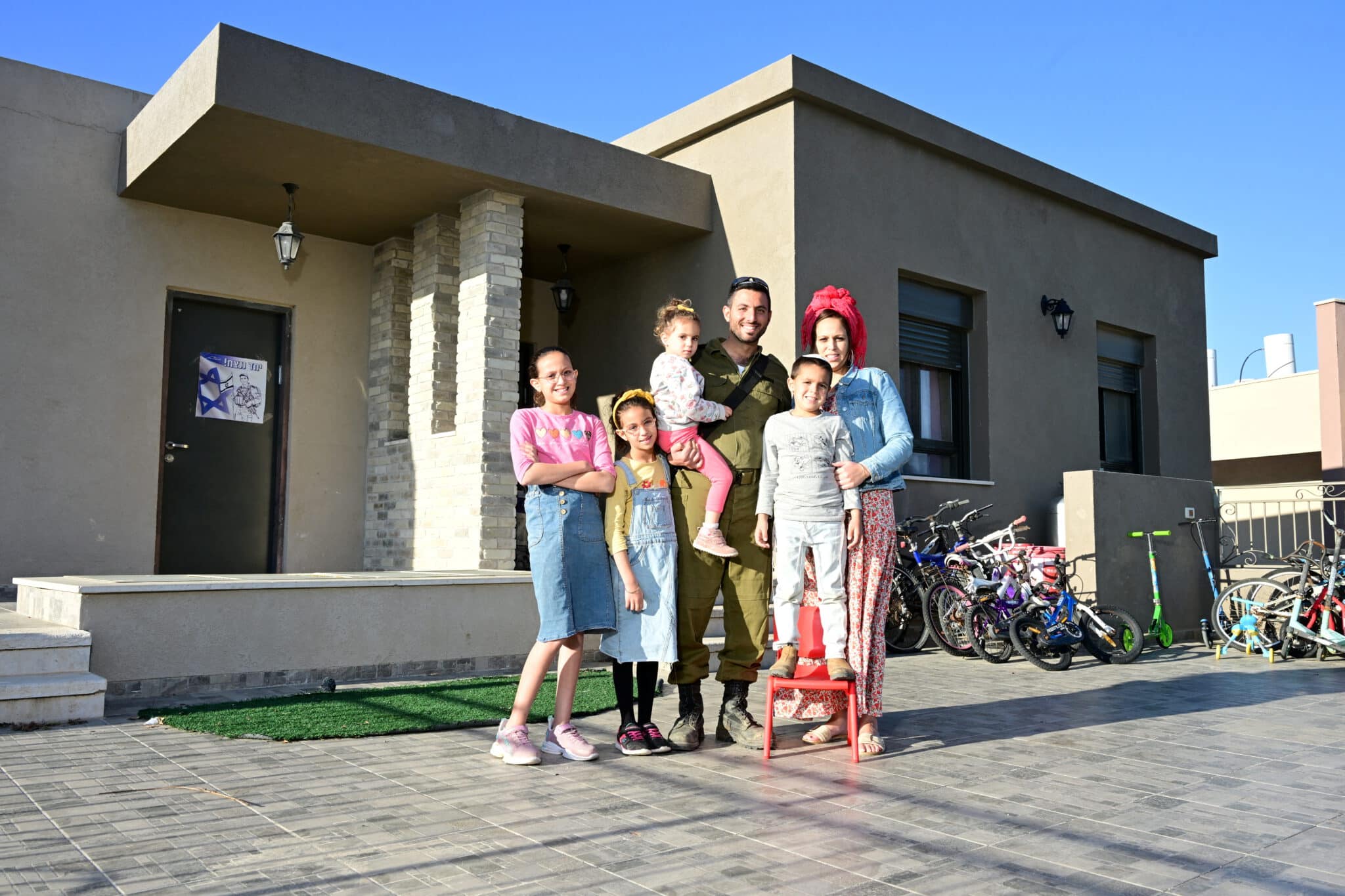
The couple currently lives in a rental unit in the settlement, eagerly awaiting the completion of their new home in the new neighborhood being built by the “Harei Zahav” real estate company. “It will be a milestone in the settlement, since it includes about 40 housing units that will be occupied this coming summer, leading to movement of residents within the settlement and the arrival of new ones. Half of the buyers already live here and are waiting to move into their new homes. This will free up existing homes and bring in families from outside. Right now there is simply no available housing.” The couple bought a semi-detached house with a garden. “We are already dreaming of planting flowers, putting up a swing, and relaxing.”
Connection with the youth
Avia is the new youth coordinator of the settlement, and before the war broke out, he managed to bond and build trust with the teenagers. “In construction, I mostly deal with technical matters, but meeting the youth makes me feel that I am giving of myself and doing something meaningful beyond the daily grind.” However, the war interrupted his work, and until he returns from the reserves, a temporary replacement was appointed. “When I come home on leave, I meet with the youth and feel recharged.”
The settlement farm
About five years ago, Hagai and Emuna Nissim established an agricultural farm on land zoned for agriculture in the settlement. The farm has various crops and a flock of sheep, and the youth and children of the settlement take part in its operation and contribute their time. “The youth connect to nature and the Land of Israel through agricultural work. A few months ago, the farm expanded with the planting of a large vineyard on the northern hill. All the residents took part in the planting and in a fundraising campaign. This shared activity connects the community, connects us to the land, and to what is happening around us.”